
Japchae Korean Glass Noodle Stir Fry Recipe
Japchae, the beloved Korean glass noodle stir-fry, is a dish that has captured hearts and taste buds worldwide, and for good reason. Its vibrant colors, delightful textures, and savory-sweet umami flavor make it an instant favorite at any gathering. What truly sets Japchae apart is its magical combination of tender, translucent sweet potato noodles – the ‘glass noodles’ – tossed with an assortment of crisp-tender vegetables and often thinly sliced beef or mushrooms. The harmonious balance of textures, from the chewy noodles to the crunchy peppers and carrots, is incredibly satisfying. Each bite is an explosion of flavor, seasoned with a rich soy sauce and sesame oil dressing that is both comforting and sophisticated. It’s the kind of dish that brings people together, perfect for a festive meal or a simple yet impressive weeknight dinner. Get ready to create your own delicious version of this iconic Korean classic!
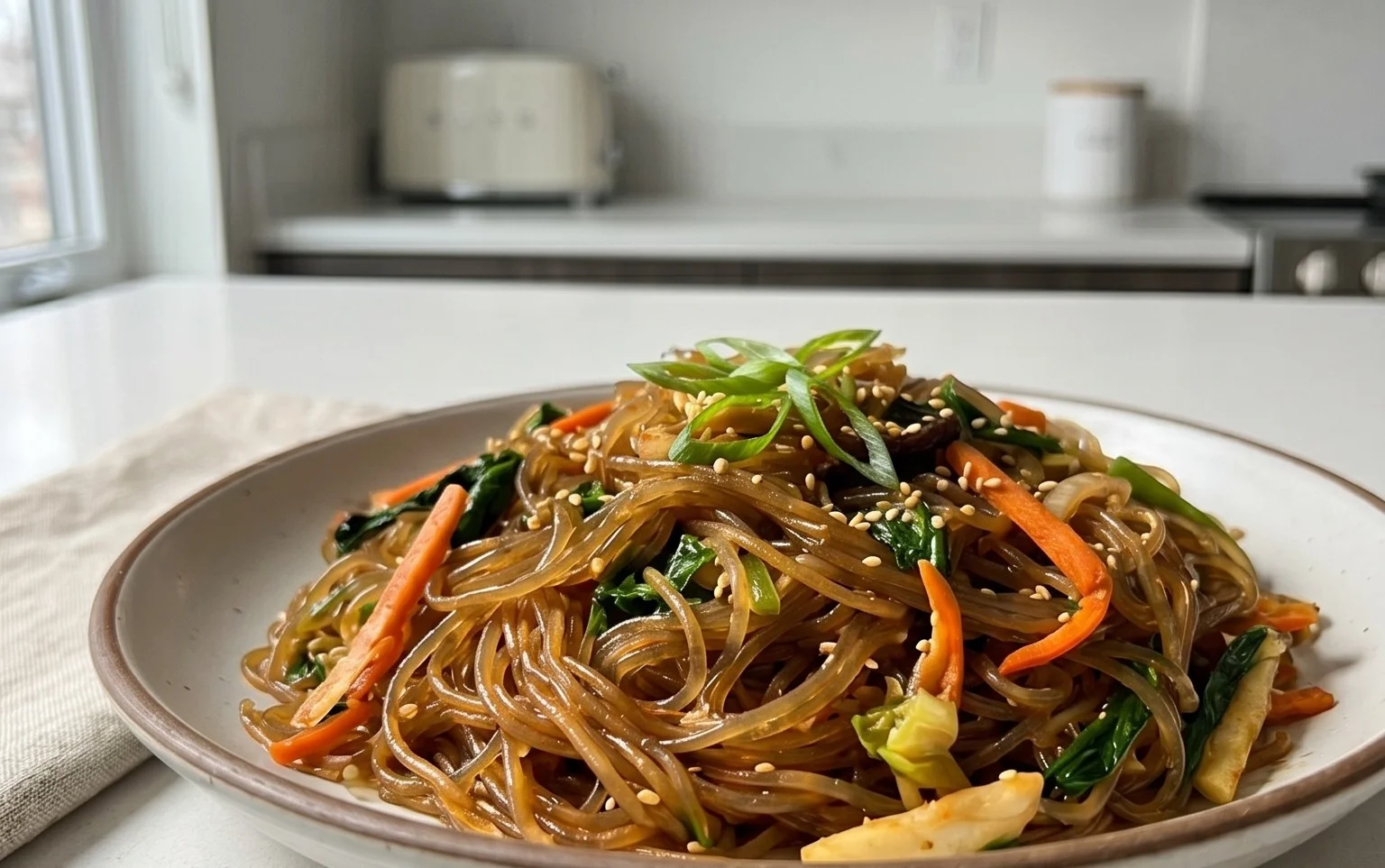
Japchae (Korean Glass Noodle Stir Fry)
Japchae is a beloved Korean dish, a vibrant and flavorful stir-fry featuring translucent glass noodles made from sweet potato starch. It’s a perfect balance of chewy noodles, tender vegetables, and savory meat, all coated in a delicious sweet and salty sauce. Japchae is often served at celebrations and holidays, but it’s also a fantastic weeknight meal that feels special. The beauty of Japchae lies in its versatility and the way the colors of the ingredients pop. It’s a dish that’s as pleasing to the eye as it is to the palate. Don’t be intimidated by the number of ingredients; the preparation is straightforward, and the results are incredibly rewarding.
Ingredients:
Cooking Instructions:
The process of making Japchae involves preparing each component separately before bringin extractg it all together. This ensures that each ingredient is cooked to perfection and that the final dish has a beautiful presentation.
1. Prepare the Noodles and Marinade
Begin extract by preparing your sweet potato glass noodles. These noodles require soaking and then boiling. Follow the package instructions carefully, as cooking times can vary. Typically, you’ll soak them in warm water for about 30 minutes until they are pliable, then boil them in generously salted water for 5-7 minutes until tender but still chewy. It’s crucial not to overcook them, as they can become mushy. Drain the noodles thoroughly and rinse them with cold water to stop the cooking process and prevent them from sticking together. Once drained, toss them with a tablespoon of toasted sesame oil and a pinch of salt and pepper. This initial seasoning helps to infuse the noodles with flavor.
While the noodles are soaking or boiling, prepare your sauce. In a small bowl, whisk together the soy sauce, honey, and brown sugar until the sugar is dissolved. This sweet and savory sauce is the heart of Japchae’s flavor profile. Set this aside.
2. Cook the Beef and Vegetables
Next, we’ll cook the beef and vegetables. If you’re using beef, make sure it’s thinly sliced against the grain for maximum tenderness. Marinate the beef strips for at least 15-20 minutes with a little soy sauce, a pinch of black pepper, and a drizzle of sesame oil.
Heat a tablespoon of oil in a large skillet or wok over medium-high heat. Add the marinated beef and stir-fry until it’s cooked through and slightly browned. Remove the beef from the skillet and set it aside.
In the same skillet, add another teaspoon of oil if needed. Add the thinly sliced yellow onion and stir-fry until softened and translucent, about 3-4 minutes. Then, add the julienned carrots and sliced mushrooms. Stir-fry for another 3-5 minutes until the vegetables are tender-crisp. You want them to retain a slight bite. Season with a pinch of salt and pepper. Remove the vegetables from the skillet and set them aside with the beef.
3. Prepare the Egg Garnish
The egg garnish adds a beautiful visual appeal and a delicate flavor to Japchae. In a medium bowl, whisk the two large eggs with a pinch of salt until well combined. Heat a lightly oiled non-stick skillet over low-medium heat. Pour in the beaten eggs thinly, creating a thin omelet. Cook for about 1-2 minutes per side, until cooked through but not browned. Allow the egg omelets to cool completely on a plate, then slice them into thin strips. This technique creates delicate ribbons of egg that are easy to incorporate into the dish.
4. Incorporate the Spinach and Green Onions
Now, it’s time to add the leafy greens and fresh aromatics. In the same skillet you used for the vegetables (no need to wash it), add a tiny bit more oil if necessary. Add the packed baby spinach and stir-fry for just 30-60 seconds, or until it’s wilted. You’re just looking to soften it slightly. Immediately remove the spinach from the skillet and set it aside. Finally, add the cut green onions and stir-fry for about 30 seconds until they are fragrant and slightly softened. These will add a fresh, pungent bite to the final dish.
5. Assemble and Toss the Japchae
This is where all the magic happens! In a large bowl, combine the cooked glass noodles, stir-fried beef, cooked vegetables (onions, carrots, mushrooms), wilted spinach, and green onions. Pour the prepared soy sauce mixture over the ingredients. Add the remaining toasted sesame oil. Gently toss everything together using tongs or your hands, ensuring that all the ingredients are evenly coated with the sauce. Be careful not to break the noodles. Continue tossing until everything is well combined and the colors are beautifully distributed. Taste and adjust seasoning with salt and pepper if necessary.
6. Serve and Garnish
Transfer the Japchae to a serving platter. Garnish with toasted sesame seeds, if desired, for an extra nutty flavor and visual appeal. Japchae can be served warm or at room temperature. It’s a fantastic dish to make ahead of time, as the flavors meld beautifully as it sits. Enjoy this delicious and satisfying Korean classic!
Conclusion:
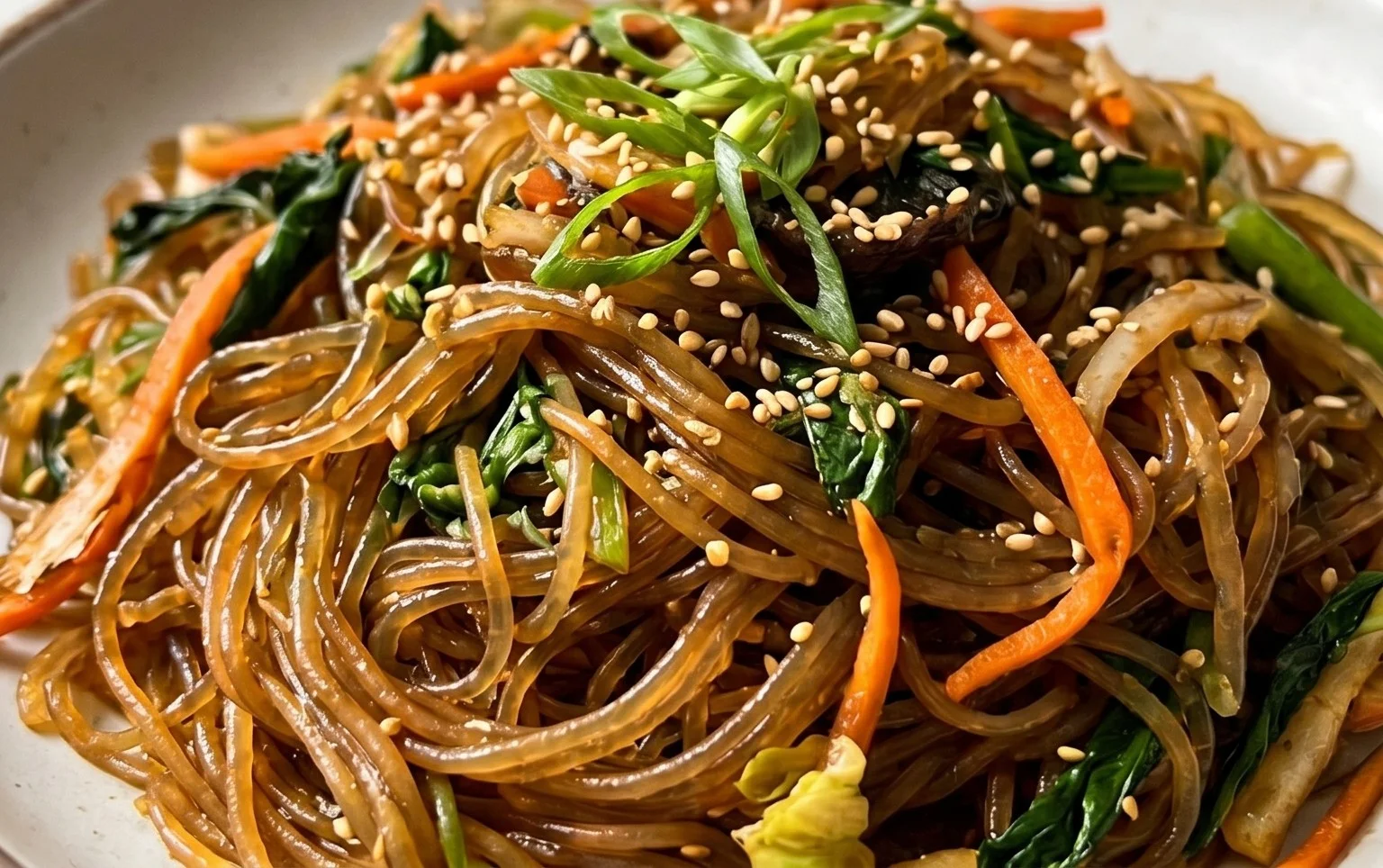
And there you have it! A delicious and vibrant bowl of Japchae, ready to grace your table. This Korean glass noodle stir fry is truly a winner because of its incredible balance of textures and flavors. The chewy, slippery glass noodles, combined with the crisp-tender vegetables and savory, slightly sweet sauce, create a harmonious and utterly satisfying dish. It’s versatile enough for a weeknight meal or impressive enough for a special occasion. I encourage you all to give this Japchae recipe a try; it’s a fantastic introduction to Korean cuisine or a beloved classic for those already familiar with its delights.
For serving, Japchae is excellent on its own, but it also pairs wonderfully with steamed rice. You can also serve it as part of a larger Korean meal, alongside kimchi and other banchan (side dishes).
Don’t be afraid to get creative with your variations! Feel free to add your favorite protein like thinly sliced beef, chicken, beef, or even tofu for a vegetarian option. Mushrooms, snap peas, or even a sprinkle of toasted sesame seeds for garnish can elevate your Japchae even further. The possibilities are endless!
Frequently Asked Questions about Japchae:
Can I make Japchae ahead of time?
Yes, you can prepare many components of Japchae ahead. The vegetables can be blanched and stored separately, and the noodles can be cooked. However, it’s best to assemble and stir-fry everything just before serving for optimal texture. The noodles can absorb too much sauce and become mushy if left sitting for too long.
What are Korean glass noodles?
Korean glass noodles, known as ‘dangmyeon’, are typically made from sweet potato starch. This gives them their characteristic translucent appearance and a delightfully chewy texture that holds up well to stir-frying. They absorb flavors beautifully, making them perfect for dishes like Japchae.
Is Japchae spicy?
The classic Japchae recipe is not typically spicy. The flavor profile is more savory and slightly sweet, with hints of soy sauce and sesame oil. If you enjoy a bit of heat, you can easily add some gochugaru (Korean chili flakes) or a drizzle of chili oil to your stir fry.
Japchae (Korean Glass Noodle Stir Fry)
A classic Korean dish featuring chewy sweet potato glass noodles stir-fried with tender beef, colorful vegetables, and a savory-sweet sauce. A perfect balance of textures and flavors.
Ingredients
-
12 ounces sweet potato glass noodles
-
16 ounces beef (cut into strips)
-
2 large eggs (beaten)
-
1 large carrot (peeled and julienned)
-
1 medium yellow onion (thinly sliced)
-
3 mushrooms (thinly sliced)
-
2 cups baby spinach (packed)
-
2 stalks green onion (cut into 1 inch pieces)
-
oil (for cooking)
-
Toasted sesame seeds (optional for garnish)
-
Salt and black pepper (as needed)
-
7 tablespoons soy sauce (light sodium)
-
3 tablespoons honey
-
2 tablespoons brown sugar
-
2 tablespoons toasted sesame oil
Instructions
-
Step 1
Cook the sweet potato glass noodles according to package directions. Drain, rinse with cold water, and toss with 1 tablespoon of sesame oil and a pinch of salt to prevent sticking. Set aside. -
Step 2
Season the beef strips with salt and pepper. In a lightly oiled pan over medium-high heat, stir-fry the beef until browned and cooked through. Remove from pan and set aside. -
Step 3
In the same pan, add a little more oil if needed. Stir-fry the sliced onion and carrots until slightly tender, about 3-5 minutes. Add the sliced mushrooms and cook for another 2-3 minutes until softened. -
Step 4
Push the vegetables to one side of the pan. Pour the beaten eggs onto the empty side and cook like a thin omelet. Once set, cut the egg into strips and set aside. -
Step 5
In a large bowl, combine the cooked noodles, beef, sautéed vegetables, and egg strips. In a small bowl, whisk together soy sauce, honey, brown sugar, and remaining sesame oil to make the sauce. Pour the sauce over the noodle mixture. -
Step 6
Gently toss all the ingredients together until evenly coated with the sauce. Add the baby spinach and green onions and toss briefly until the spinach wilts. -
Step 7
Taste and adjust seasoning with salt and pepper if needed. Serve immediately, garnished with toasted sesame seeds if desired.
Important Information
Nutrition Facts (Per Serving)
It is important to consider this information as approximate and not to use it as definitive health advice.
Allergy Information
Please check ingredients for potential allergens and consult a health professional if in doubt.