Easy Miso Soup Recipe – Quick & Authentic Flavor
Miso soup recipe is more than just a comforting bowl of broth; it’s a gateway to the soul of Japanese cuisine. There’s a reason this deceptively simple dish is a staple in homes and restaurants across Japan and beyond. Its magic lies in its incredible versatility and the deep, umami-rich flavor that only fermented soybeans, like those found in miso paste, can deliver. When you master a good miso soup recipe, you unlock a world of delicious possibilities. It’s the perfect light starter, a nourishing side, or even a satisfying quick meal when paired with rice. What truly makes it special is its ability to be both incredibly grounding and surprisingly complex, offering a delicate balance of salty, savory, and sometimes even slightly sweet notes that dance on your palate. Let’s dive into creating a truly exceptional miso soup in your own kitchen.
Miso Soup Recipe
There’s something incredibly comforting and deeply satisfying about a warm bowl of miso soup. It’s more than just a dish; it’s a culinary hug, a whisper of Japanese tradition in every spoonful. For many, it’s the quintessential starter to a Japanese meal, but honestly, I find it’s perfect any time of day. Whether you’re craving a light breakfast, a soothing lunch, or a gentle way to end your dinner, this simple miso soup recipe is your ticket to that authentic taste.
Making it at home might seem a little intimidating if you’re new to Japanese cooking, but I promise you, it’s remarkably straightforward. The beauty of miso soup lies in its simplicity and the depth of flavor you can achieve with just a few key ingredients. The star, of course, is the miso paste itself. There are many varieties – white (shiro), red (aka), and mixed (awase) – each offering a unique salty, umami-rich profile. For a classic, approachable flavor, I often lean towards white or a mixed miso, but don’t be afraid to experiment once you get the hang of it. This recipe will guide you through creating a foundational miso soup that you can then personalize to your heart’s content.
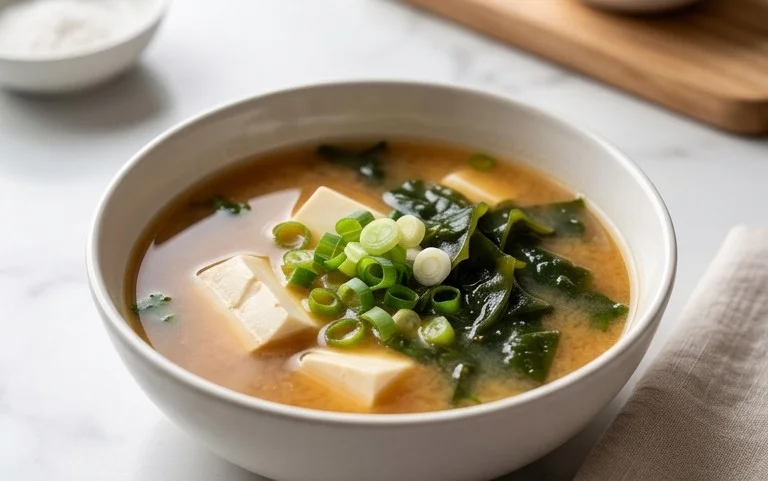
The other crucial element is dashi, the Japanese soup stock. While you can buy instant dashi granules or packets, making your own from scratch with kombu (dried kelp) and katsuobushi (dried bonito flakes) yields an unparalleled depth of flavor. However, for the non-alcoholic sake of ease and accessibility, this recipe assumes you’ll be using pre-made dashi, which is readily available in most Asian markets or the international aisle of larger supermarkets. The silken tofu adds a delicate, creamy texture, while the dried seaweed rehydrates to offer a subtle oceanic note and a pleasant chew. And finally, the fresh scallions provide a bright, peppery finish. Let’s get cooking!
Ingredients:
Cooking Instructions
Step 1: Prepare the Dashi and Seaweed
Begin extract by gently heating your dashi in a medium saucepan over medium heat. You don’t want it to come to a rolling boil at this stage, just a gentle simmer. While the dashi is warming, take your dried seaweed and place it in a small bowl. Pour a little warm water over it – just enough to cover. Let it soak for about 5-10 minutes. This process rehydrates the seaweed, making it tender and edible. Once it has softened, drain off any excess water. If you’ve used a larger piece of kombu, you can snip it into smaller, bite-sized pieces with kitchen scissors. This is also a good time to prepare your silken tofu by carefully cutting it into small, bite-sized cubes. For silken tofu, be gentle as it’s quite delicate.
Step 2: Add the Tofu and Rehydrated Seaweed to the Dashi
Once your dashi is warm and the seaweed is rehydrated, it’s time to add the main components of the soup. Carefully add the prepared silken tofu cubes into the simmering dashi. Then, add the rehydrated and drained seaweed to the pot as well. Allow these ingredients to heat through in the dashi for about 2-3 minutes. This gentle heating ensures that the tofu warms up without breaking apart too much and that the seaweed is fully incorporated into the broth. Avoid vigorous stirring at this point, as it can damage the delicate tofu.
Step 3: Dissolve the Miso Paste
This is perhaps the most crucial step for achieving a perfectly balanced miso soup. You never want to boil miso paste, as high heat can destroy its delicate flavor and beneficial enzymes. Instead, in a separate small bowl, place your miso paste. Ladle in about ½ cup of the warm dashi from the pot into this bowl. Using a whisk or a fork, gently stir and dissolve the miso paste completely. You want a smooth, lump-free mixture. This process of tempering the miso paste in a bit of warm broth before adding it to the main pot helps it to meld seamlessly into the soup and prevents any clumpiness. Start with 2 tablespoons of miso paste; you can always add more later if you prefer a stronger flavor.
Step 4: Combine Miso with the Broth
Once the miso paste is fully dissolved and has a smooth consistency, it’s time to gently incorporate it into the main pot of dashi. Carefully pour the dissolved miso mixture back into the saucepan with the dashi, tofu, and seaweed. Stir gently to combine everything. Now, reduce the heat to low. The soup should be very hot, but it should not come to a boil. You’ll see steam rising, and perhaps a few tiny bubbles forming around the edges, but a full boil is to be avoided. Simmer gently for another minute or two, allowing the flavors to meld together beautifully. Taste the soup at this point. If you find it needs a little more saltiness or a deeper miso flavor, you can dissolve another ½ tablespoon of miso paste in a little warm dashi and add it to the pot, stirring gently.
Step 5: Serve and Garnish
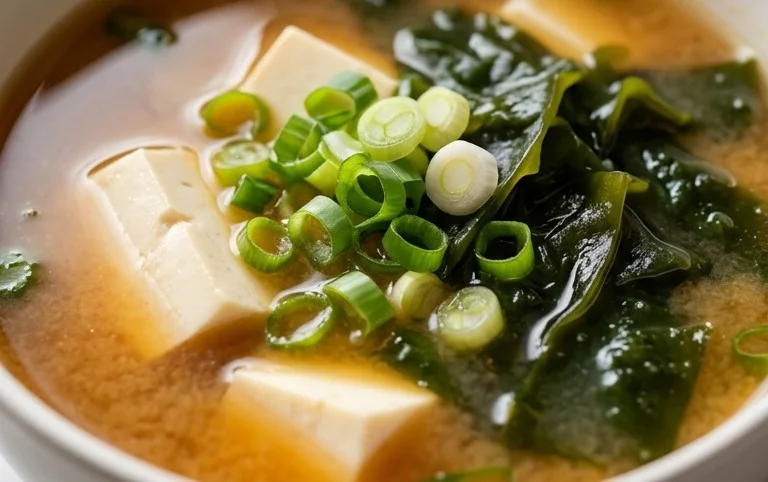
Your delicious homemade miso soup is now ready to be served! Ladle the hot soup carefully into individual bowls, making sure each bowl gets a good distribution of the tender tofu and rehydrated seaweed. Finally, sprinkle the freshly chopped scallions over the top of each bowl as a garnish. The vibrant green of the scallions adds a beautiful visual appeal and a burst of fresh flavor that perfectly complements the rich, savory broth. Serve immediately and enjoy the simple, profound comfort of this traditional Japanese dish. It’s a perfect light meal on its own or a delightful accompaniment to sushi, tempura, or any of your favorite Japanese entrees.
Conclusion:
And there you have it! This simple yet incredibly satisfying miso soup recipe is a true gem. It’s wonderfully quick to prepare, making it the perfect starter for any meal, a light lunch, or even a comforting snack. The beauty of this recipe lies in its depth of flavor derived from just a few key ingredients, and its adaptability. I truly encourage you to give this delicious miso soup a try. You’ll be amazed at how something so wholesome can be so rewarding.
For serving, this miso soup is a natural pairing with sushi, grilled fish, or a simple rice dish. However, don’t hesitate to enjoy it on its own for a moment of pure culinary peace. Feel free to experiment with different additions to make it your own. Adding silken tofu cubes, fresh spinach, enoki mushrooms, or even some finely shredded chicken can elevate this classic to new heights.
Frequently Asked Questions:
What kind of miso paste should I use for this miso soup recipe?
You can use red, white, or awase (mixed) miso paste. White miso offers a milder, slightly sweeter flavor, while red miso is more robust and earthy. Awase miso provides a balanced taste. For a begin extractner-friendly experience, white or awase miso is often recommended.
Can I make miso soup ahead of time?
While you can prepare the dashi broth ahead of time, it’s best to add the miso paste and any delicate ingredients like tofu or greens just before serving. Miso paste loses some of its delicate flavor and beneficial probiotics when boiled for extended periods.
What are some good vegetarian/vegan variations for miso soup?
This recipe is easily adaptable! Ensure your dashi is made with kombu (kelp) and shiitake mushrooms for a vegan broth. Add silken tofu, cubed firm tofu, wakame seaweed, and a variety of vegetables like bok choy, carrots, and scallions. Avoid any meat or fish-based additions.
Miso Soup Recipe
A simple and classic Japanese miso soup recipe.
Ingredients
-
2½ cups Dashi
-
1 heaping tablespoon dried seaweed
-
4 oz silken tofu (cut into small pieces)
-
2-2½ tablespoons miso paste (or to taste)
-
1 tablespoon scallion (chopped)
-
1 teaspoon mirin (optional, for sweetness)
-
A pinch of white pepper (optional, for depth)
Instructions
-
Step 1
Rehydrate the dried seaweed in a small bowl with some water for about 5 minutes, then drain. -
Step 2
In a medium saucepan, bring the Dashi to a simmer over medium heat. Do not boil. -
Step 3
Add the rehydrated seaweed and silken tofu to the simmering Dashi. Cook for 1-2 minutes until heated through. -
Step 4
In a small bowl, whisk the miso paste with a ladleful of the hot Dashi until smooth. This prevents clumps. -
Step 5
Gently stir the dissolved miso paste back into the saucepan. Heat through for another minute, but do not let the soup boil, as this can diminish the flavor of the miso. -
Step 6
Stir in the chopped scallions. Add mirin and white pepper if using. -
Step 7
Ladle the miso soup into bowls and serve immediately.
Important Information
Nutrition Facts (Per Serving)
It is important to consider this information as approximate and not to use it as definitive health advice.
Allergy Information
Please check ingredients for potential allergens and consult a health professional if in doubt.