Hearty Beef Stew – Easy Comfort Food Recipe
Chicken Stew is the ultimate comfort food, a warm hug in a bowl that instantly transports us to cozy kitchens and cherished memories. There’s something inherently soul-satisfying about a slow-cooked, hearty chicken stew, isn’t there? It’s the kind of dish that simmers away on the stovetop, filling your home with an irresistible aroma, promising a meal that’s both nourishing and incredibly delicious. People adore it because it’s incredibly versatile – you can pack it with tender chicken, an abundance of colorful vegetables like carrots, potatoes, and peas, all bathed in a rich, savory broth. What truly makes this particular chicken stew recipe special is its depth of flavor, achieved through a careful balance of herbs and a touch of creamy goodness that elevates it from simple to sublime. Get ready to fall in love with your new favorite weeknight meal or weekend gathering centerpiece.
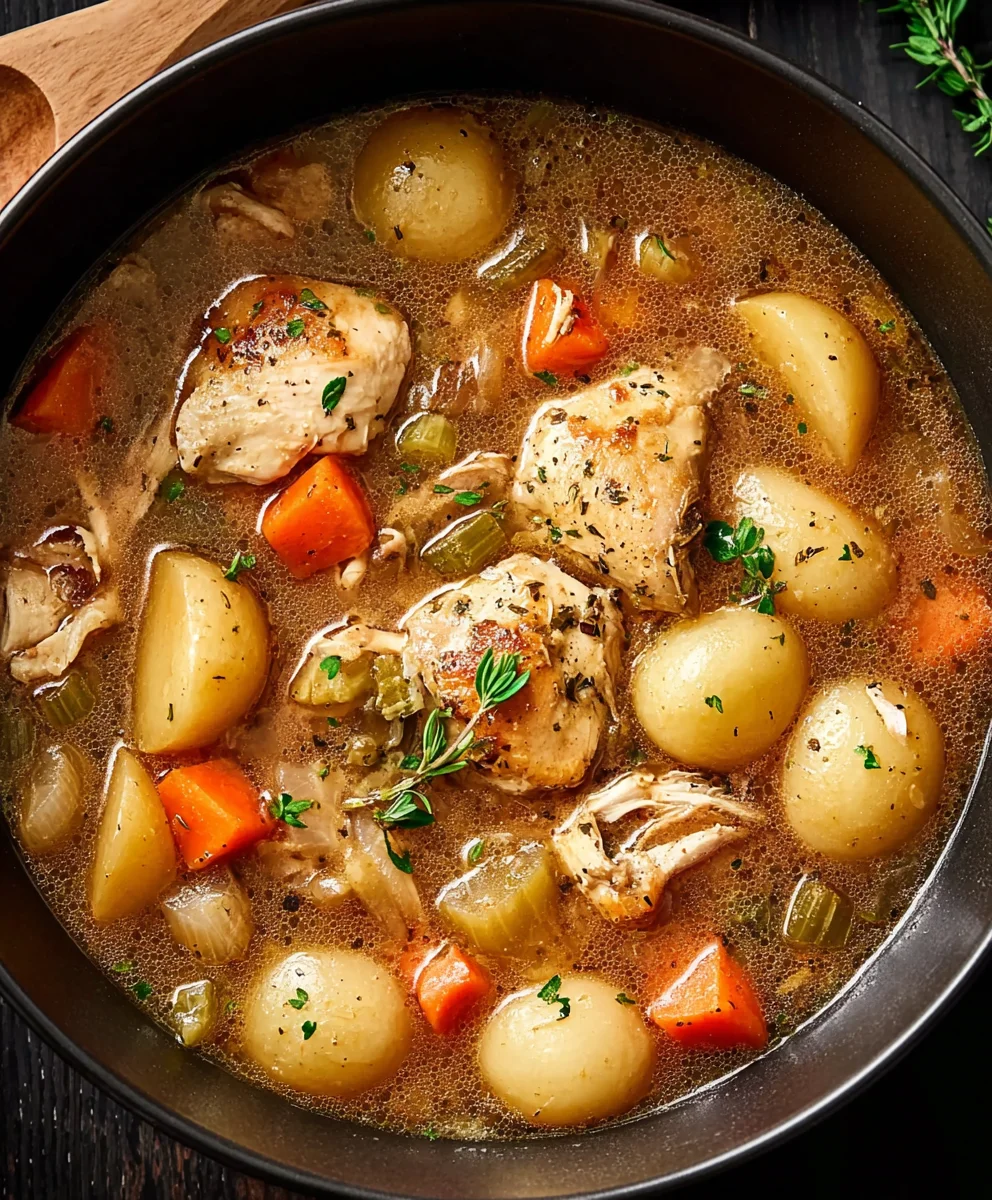
Ingredients:
- 1 medium yellow onion
- 3 ribs celery
- 4 cloves garlic
- 1/2 pound carrots
- 1.75 pounds boneless, skinless chicken thighs
- 4 tablespoons all-purpose flour, divided
- 2 tablespoons unsalted butter
- 1 tablespoon olive oil
- 1.5 pounds baby potatoes
- 1 teaspoon dried parsley
- 1/2 teaspoon dried thyme
- 1/2 teaspoon dried rosemary
- 1/2 teaspoon dried sage
- 1/4 teaspoon black pepper, freshly cracked
- 2 cups low-sodium chicken broth
Preparing the Chicken and Vegetables
Step 1: Mise en Place for Flavor Foundations
Begin extract by preparing all your vegetables for this comforting chicken stew. Finely dice the yellow onion. You want small, uniform pieces so they soften and meld into the stew beautifully. Trim the celery ribs and dice them into 1/4-inch pieces. Similar to the onion, consistent sizing ensures even cooking. Peel the carrots, then cut them into 1/2-inch thick rounds or half-moons, depending on their diameter. Mince the garlic cloves; a fine mince will distribute its pungent aroma throughout the stew without overwhelming any single bite. For the chicken, trim any excess fat from the boneless, skinless chicken thighs. Cut the thighs into bite-sized pieces, about 1 to 1.5 inches. This size is perfect for both easy eating and ensuring they cook through thoroughly without becoming dry. Having everything prepped and ready to go, known as “mise en place,” makes the cooking process much smoother and more enjoyable.
Step 2: Building the Flavor Base and Coating the Chicken
In a shallow dish or on a plate, place 2 tablespoons of the all-purpose flour. Season this flour generously with salt (I usually add about 1 teaspoon, but you can adjust to your preference) and the 1/4 teaspoon of freshly cracked black pepper. Dredge the chicken pieces in this seasoned flour, coating each piece evenly. Gently shake off any excess flour. This step is crucial for thickening the stew later and creating a lovely crust on the chicken. In a large, heavy-bottomed pot or Dutch oven, heat the 1 tablespoon of olive oil and 2 tablespoons of butter over medium-high heat. Once the butter has melted and the oil is shimmering, carefully add the floured chicken pieces in a single layer. Do not overcrowd the pot; you may need to work in batches to achieve a good sear. Sear the chicken for about 2-3 minutes per side, until it’s golden brown. This browning process adds a depth of flavor through the Maillard reaction, which is essential for a truly delicious chicken stew. Remove the seared chicken from the pot and set it aside on a clean plate.
Simmering the Hearty Stew
Step 3: Sautéing the Aromatics and Incorporating Flour
Reduce the heat to medium. Add the diced yellow onion and diced celery to the same pot, scraping up any browned bits (fond) from the bottom of the pot left by the chicken. Cook, stirring occasionally, for about 5-7 minutes, or until the onions are softened and translucent. Add the minced garlic and cook for another minute until fragrant, being careful not to burn it. Now, sprinkle the remaining 2 tablespoons of all-purpose flour over the vegetables in the pot. Stir well to combine, ensuring the flour is evenly distributed and coats the vegetables. Cook this mixture for about 1-2 minutes, stirring constantly. This step is called “roux” formation and it helps to cook out the raw flour taste, contributing to a smoother, thicker stew.
Step 4: Deglazing and Adding Liquids and Herbs
Gradually pour in the 2 cups of chicken broth, whisking continuously to prevent any lumps from forming. As the broth heats up, it will combine with the flour and vegetable mixture to create a cohesive base for your stew. Bring the liquid to a gentle simmer, scraping the bottom of the pot once more to ensure all the flavorful browned bits are incorporated. Once simmering, stir in the dried parsley, dried thyme, dried rosemary, and dried sage. These dried herbs are perfect for slow cooking and will infuse the stew with their comforting aromas. Season with a pinch of salt and more black pepper if desired, keeping in mind the saltiness of your chicken broth.
Stepgin extract Bringing it All Together for a Slow Simmer
Return the seared chicken pieces and any accumulated juices from the plate back into the pot with the simmering broth and vegetables. Add the 1.5 pounds of baby potatoes to the pot. If your baby potatoes are on the larger side, you might want to cut them in half or quarters so they cook through evenly with the other ingredients. Ensure all the ingredients are mostly submerged in the liquid. Bring the stew back up to a gentle simmer. Once simmering, reduce the heat to low, cover the pot tightly, and let it cook for at least 30-40 minutes, or until the potatoes are fork-tender and the chicken is cooked through and very tender. Stir occasionally to prevent sticking and ensure even cooking. You’ll know it’s ready when the potatoes yield easily to a fork and the stew has thickened to a lovely, hearty consistency. For an even richer flavor, you can simmer it for up to an hour, allowing the flavors to deepen and meld beautifully.
Conclusion:
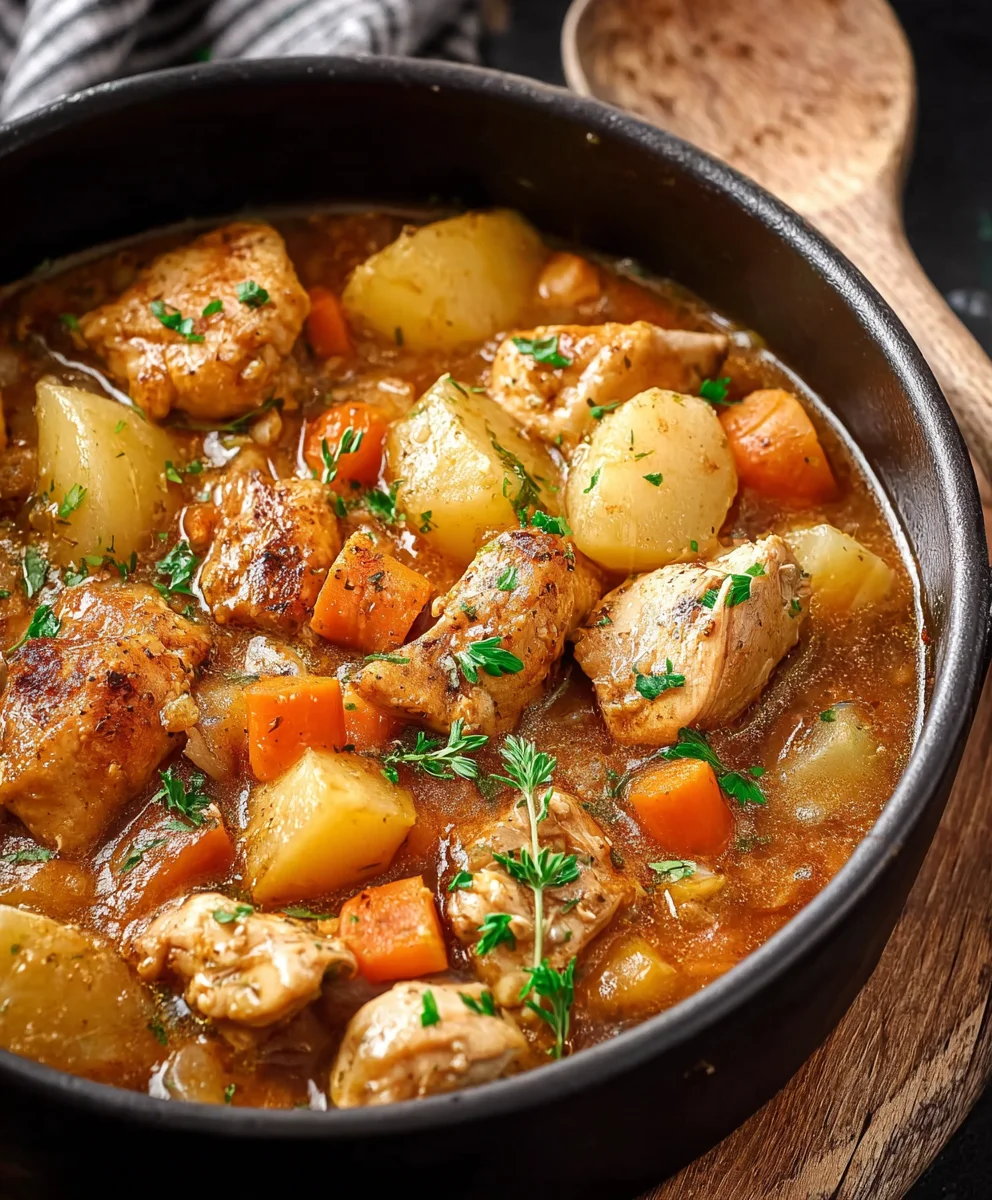
There you have it – your guide to crafting a truly satisfying Chicken Stew! This recipe is a testament to the power of simple ingredients coming together to create something incredibly comforting and flavorful. We’ve walked through each step, from browning the chicken to simmering those aromatic vegetables until they’re perfectly tender. This Chicken Stew is more than just a meal; it’s an experience, perfect for a chilly evening or a hearty Sunday dinner. Don’t be afraid to make it your own!
For serving, a crusty loaf of bread for dipping is an absolute must. You could also pair it with mashed potatoes or a side of simple steamed greens. When it comes to variations, the possibilities are endless! Feel free to add different root vegetables like parsnips or turnips, introduce some smoky paprika for a Spanish twist, or even stir in some heavy cream at the end for an extra rich and decadent finish. This Chicken Stew is remarkably forgiving and adaptable. So gather your ingredients, embrace the warmth, and enjoy the delicious results. Happy cooking!
Frequently Asked Questions:
Can I make this Chicken Stew ahead of time?
Absolutely! In fact, Chicken Stew often tastes even better the next day as the flavors have more time to meld. Allow it to cool completely before refrigerating. Reheat gently on the stovetop or in the microwave.
What if I don’t have fresh herbs?
Dried herbs can certainly be used as a substitute. Generally, you’ll want to use about one-third the amount of dried herbs compared to fresh. For example, if a recipe calls for 1 tablespoon of fresh thyme, use 1 teaspoon of dried thyme. Add dried herbs earlier in the cooking process than you would fresh ones to allow their flavor to develop.
Hearty Beef Stew – Easy Comfort Food Recipe
A simple and comforting beef stew recipe perfect for a hearty meal.
Ingredients
-
1 medium yellow onion
-
3 ribs celery
-
4 cloves garlic
-
1/2 pound carrots
-
1.75 pounds boneless beef chuck, cut into 1.5-inch pieces
-
4 tablespoons all-purpose flour, divided
-
2 tablespoons unsalted butter
-
1 tablespoon olive oil
-
1.5 pounds baby potatoes, halved or quartered if large
-
1 teaspoon dried parsley
-
1/2 teaspoon dried thyme
-
1/2 teaspoon dried rosemary
-
1/2 teaspoon dried sage
-
1/4 teaspoon black pepper, freshly cracked
-
2 cups low-sodium beef broth
Instructions
-
Step 1
Finely dice the yellow onion. Trim and dice celery into 1/4-inch pieces. Peel and cut carrots into 1/2-inch rounds or half-moons. Mince garlic. Trim excess fat from beef and cut into bite-sized pieces (about 1 to 1.5 inches). -
Step 2
In a shallow dish, combine 2 tablespoons of all-purpose flour, 1 teaspoon salt, and 1/4 teaspoon black pepper. Dredge the beef pieces in the seasoned flour, shaking off excess. Heat olive oil and butter in a large pot or Dutch oven over medium-high heat. Sear beef in batches until golden brown on all sides. Remove and set aside. -
Step 3
Reduce heat to medium. Add diced onion and celery to the pot, scraping up browned bits. Cook for 5-7 minutes until softened. Add minced garlic and cook for 1 minute until fragrant. Sprinkle remaining 2 tablespoons of flour over vegetables and stir well. Cook for 1-2 minutes, stirring constantly. -
Step 4
Gradually pour in beef broth, whisking continuously to prevent lumps. Bring to a gentle simmer, scraping the bottom of the pot. Stir in dried parsley, thyme, rosemary, and sage. Season with a pinch of salt and more pepper if desired. -
Step 5
Return the seared beef and any accumulated juices to the pot. Add the baby potatoes. Ensure all ingredients are mostly submerged. Bring back to a gentle simmer, then reduce heat to low, cover tightly, and cook for 30-40 minutes, or until potatoes are fork-tender and beef is cooked through and tender. Stir occasionally.
Important Information
Nutrition Facts (Per Serving)
It is important to consider this information as approximate and not to use it as definitive health advice.
Allergy Information
Please check ingredients for potential allergens and consult a health professional if in doubt.